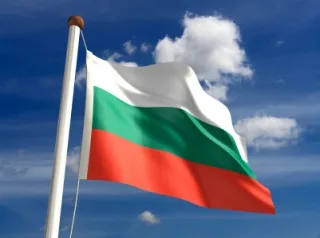
Bulgaria is an attractive country by many measures.
3 min readUpdated
Low cost of doing business:
Bulgaria has the most favourable tax regime in Europe. The corporate income tax rate is 10%, the lowest in the EU. Personal income tax is 10%, a flat rate. Industrial sectors in areas with high unemployment are granted a 0% tax rate. There is a 2-year VAT exemption on imports of equipment for investment projects over €5 million that create at least 50 jobs. The depreciation period for computers and new production equipment is 2 years. 5% tax on dividends and liquidation quotas (0% for EU tax residents). Bulgaria has one of the most competitive labour costs in Central and Eastern Europe. Affordable office rents and low utility costs. Bulgarian electricity prices for industrial consumers are 70% of the European average.
Macroeconomic and financial stability:
real GDP growth — 1.2% (2014)
inflation, annual change — -1.6% (2014)
unemployment — 10.6% (2014)
currency stability as a result of the introduction of the currency board in 1997, the Bulgarian lev is pegged to the euro at 1.95583
government deficit — -1.5% (2013)
government debt — 18.9% (2013)
Bulgaria’s credit rating was recently upgraded by Moody’s.
Political situation and business stability:
Bulgaria is a member of the European Union, NATO and the WTO
Strategic location:
Located in the heart of the Balkans, Bulgaria is a strategic logistics hub. Ease of freight transport is provided through:
Five pan-European corridors (IV, VII, VII, XI, X) that pass through the country;
The TRACECA transport programme, which connects Europe with the Caucasus and Central Asia;
Four major airports: Sofia, Plovdiv, Burgas and Varna;
Two major seaports: Varna and Burgas;
Numerous ports on the Danube;
Market access:
Thanks to its location, Bulgaria provides direct access to the following major markets:
The European Union — a zero-tariff market with a population of 500 million;
The CIS — a market with high potential, but still not fully explored;
Turkey — a zero-tariff market of around 80 million people;
The Middle East — a market with high product sales;
The North African market.
Workforce:
The working-age population is well educated, highly qualified and multilingual;
62.2% of the total population is of working age (approximately 4.6 million)
51 universities graduate 60,000 students annually;
98% of upper-secondary students study a foreign language (usually English) and 73% study a second language (mainly German, French, Spanish, Russian);
94% of schools have Internet access.
Information services. Reduced time for administrative procedures;
Individual administrative servicing required to carry out the investment project;
A simplified regime (without tender or competition) for acquiring ownership or limited rights over real estate — private state and private municipal property;
Financial support for training to obtain professional qualifications, including for trainees from higher education institutions in the country who have taken up new jobs related to the investment (only for investments in high-tech activities or in municipalities with high unemployment);
Financial support for the construction of technical infrastructure elements;
Priority projects receive all the privileges available to investors holding a certificate, plus:
The lowest possible costs for acquiring state and municipal land + exemption from taxes for changing the land’s status;
A working group to support the project, provided by the Council of Ministers;
A financial grant scheme of up to 10% of the investment value (50% of the value of research and development work)