
Temporary Protection: New Rules for 2026
Bulgaria introduces new temporary protection rules for Ukrainians. Who is affected, what are the risks, and how can you obtain a residence permit?
In 2025, amendments to the Bulgarian road traffic act came into force. Let's look at what has changed in it.

Some of the amendments are technical and affect the lives of ordinary road users only indirectly. For example, the persons responsible for this are now obliged to remove road signs about repair works on time. Many Bulgarian drivers are familiar with the situation where restrictive signs are not removed for a long time after the repairs are finished, so this news is among the positive ones.
In addition to the old rules, such as riding as close as possible to the right edge of the roadway, new ones have appeared.
Cyclists must:
Cyclists are prohibited from:
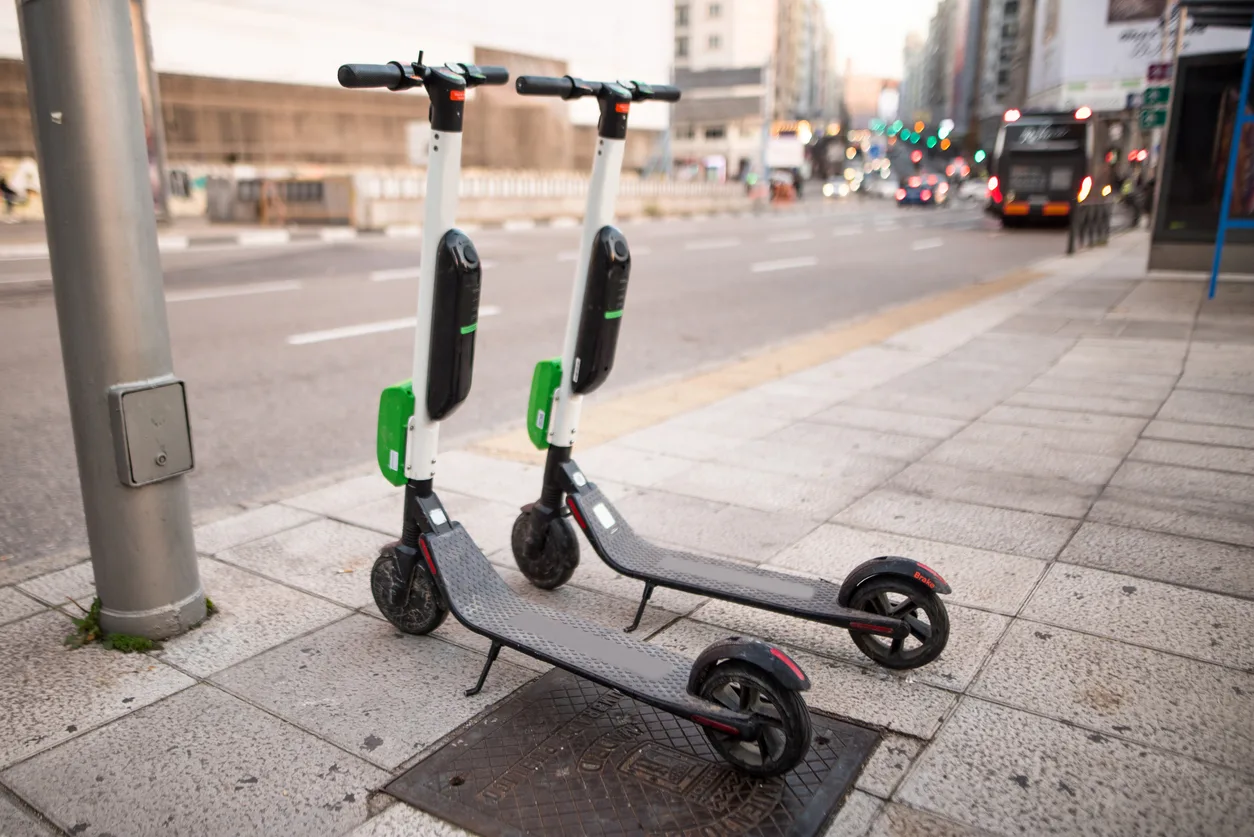
The law now devotes a special section to personal electric mobility devices.
Scooter riders are obliged to:
Scooter riders are prohibited from:
Electric scooters may only be ridden from the age of 16.
The rules for crossing railway tracks have been tightened, and the requirements for observing speed limits have become stricter. In populated areas, “Zones 30” are planned, where the maximum speed will be no more than 30 km/h.
Talking on the phone without a hands-free kit is prohibited — the hands must be free.
When approaching areas where there are children, blind or deafblind people nearby, the driver must slow down in order to brake quickly if necessary.
The greatest public interest was aroused by the news about increased fines. Now, for exceeding the speed limit outside populated areas by more than 40 km/h, in addition to a fine of 600 leva, the licence is taken away for 2 months. For a repeat offence the fine is doubled and the licence is taken away for 3 months. Driving without documents will now cost not 10 but 30 leva. Failing to give way to a pedestrian at a crossing or running a red light carries a fine of 150 leva.
Now pedestrians must not have mobile phones in their hands either — at least when crossing the road. In addition, pedestrians must obey the instructions of the traffic officer and traffic lights, must not climb over barriers, must give way to trams and trains, and must cross city streets only at crossings. Roads outside the city and two-lane city streets may be crossed without a crossing if there is none, but subject to the other rules. However, walking in tunnels and on bridges where there are no pavements is not allowed at all. It is also prohibited to cross the street directly in front of or behind a stationary bus, trolleybus or tram.
Did not find the answer here? Write to us — we will look at your case and tell you what comes next.
Mon–Fri 9:00–17:30 (EET)
Ask a question News
Bulgaria introduces new temporary protection rules for Ukrainians. Who is affected, what are the risks, and how can you obtain a residence permit?
 News
Bulgaria is stepping up the practice of refusing and revoking long-term residence permits for foreign nationals who obtained their status on the basis of activity as trade representatives.
 News
In 2026, a pan-European digital wallet — the European Digital Identity Wallet (EUDI Wallet) — will appear in the countries of the European Union. This mobile app will allow EU citizens and residents to store documents, confirm their identity online and offline and sign legally binding documents — free of charge and with recognition across the entire Union.
This article describes the general procedure. Your situation almost always has specifics — tell us about it and we will point out the shortest route.
Book a consultation