
Annual reporting in Bulgaria from 2027: a single system
NSI, the National Revenue Agency (NAP) and the Registry Agency are introducing the "Single Entry Point" information system From 1 January 2027, a new procedure…
Boris the First, who later received the title of knyaz, ascended the Bulgarian throne in 852. His reign was marked by two of the most important events in the country's history – the baptism of the Bulgarians and the creation of the Slavic alphabet. Boris the First, baptiser and enlightener of the Bulgarians, was subsequently canonised.

The beginning of Boris’s reign was marked by a series of military conflicts. Fickle fortune did not favour the ruler on the battlefield, his family members were taken captive, famine came to the country, and the situation was tense. Boris saw deliverance from all these misfortunes in baptism. This step made it possible to achieve several goals at once. First, Boris counted on Bulgaria being recognised by other powers, and second,
the adoption of Christianity was meant to unite the people of the country. In addition, in exchange for baptism Byzantium ceded certain territories to Bulgaria.
The Bulgarian ruler himself accepted Christianity in secret in 864. He took the name of his confessor – Michael. Later he began to spread Christianity in the country with confidence. Not everyone greeted the baptism of Bulgaria with enthusiasm: an uprising of the regional governors — the bolyars — broke out in the provinces and was brutally suppressed.
As expected, the adoption of Christianity united the various peoples living in Bulgaria and raised the state’s international standing. New laws were adopted and new rules of life were introduced in place of the outdated ones established back under Khan Omurtag.
The Bulgarian church was initially subordinate to the Byzantine one, but in 879 it became independent.
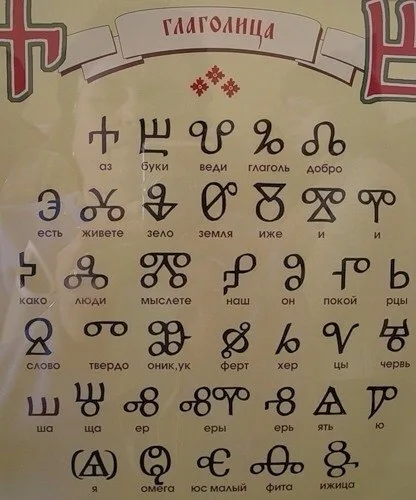
In 855 the renowned Byzantine scholars, the brothers Cyril and Methodius, who were at that time in a monastery in Asia Minor, created the Slavic alphabet and began translating church books into it. Later, in 885, Knyaz Boris received in Bulgaria the disciples of Cyril and Methodius – Naum, Angelarius and Clement – whose task was to popularise Slavic writing in Bulgaria and to establish the first educational institutions. Unlike the rulers of other states, who, to put it mildly, did not approve of the activities of Cyril and Methodius’s disciples, Knyaz Boris gave every support to the introduction of Slavic writing – the Glagolitic alphabet, and then the Cyrillic alphabet, which in time replaced the first one. Thanks to this, Boris went down in history as a great enlightener, and Bulgaria soon became a major cultural centre in Europe.
In 889 Knyaz Boris I voluntarily renounced the throne and withdrew to the monastery of St Panteleimon. However, in 893 he had to return to governing the country in order to depose his own son Vladimir, who had attempted to abandon
Christianity in favour of paganism. As a result, Boris deposed his heir with his own hands, blinded him and sent him to prison. The people were told that another of Boris’s sons – Simeon – was ascending the throne, that the capital of the state was being moved from Pliska to Veliki Preslav, and that church services would henceforth be held only in the Bulgarian language.
Did not find the answer here? Write to us — we will look at your case and tell you what comes next.
Mon–Fri 9:00–17:30 (EET)
Ask a question Useful information
NSI, the National Revenue Agency (NAP) and the Registry Agency are introducing the "Single Entry Point" information system From 1 January 2027, a new procedure…
 Useful information
New amendments to the Law on Foreigners (ZChRB) could change the rules on employment of foreigners and on keeping residence status in Bulgaria.
 Useful information
The subject of obtaining an EU Blue Card (Синя карта на ЕС) in Bulgaria remains one of the most discussed topics among foreign highly qualified specialists and employers.
This article describes the general procedure. Your situation almost always has specifics — tell us about it and we will point out the shortest route.
Book a consultation