
Annual reporting in Bulgaria from 2027: a single system
NSI, the National Revenue Agency (NAP) and the Registry Agency are introducing the "Single Entry Point" information system From 1 January 2027, a new procedure…
During the period of Ottoman rule, a great many mosques were built in Bulgaria — in Sofia alone there were more than fifty. However, after the liberation of Bulgaria the Ottomans found life very uncomfortable in a country where they were hated, and everyone who could returned to Turkey.

The mosques stood empty, and most of them were destroyed, but many have survived to this day. Some are still in use, while others have been preserved as architectural and historical monuments.
The Tombul Mosque, or the Sherif Halil Pasha Mosque, is the largest Muslim place of worship in Bulgaria and is one of the country’s hundred tourist sites. It was once built in the centre of the town, but Shumen has grown, and today the mosque stands in its south-western part.
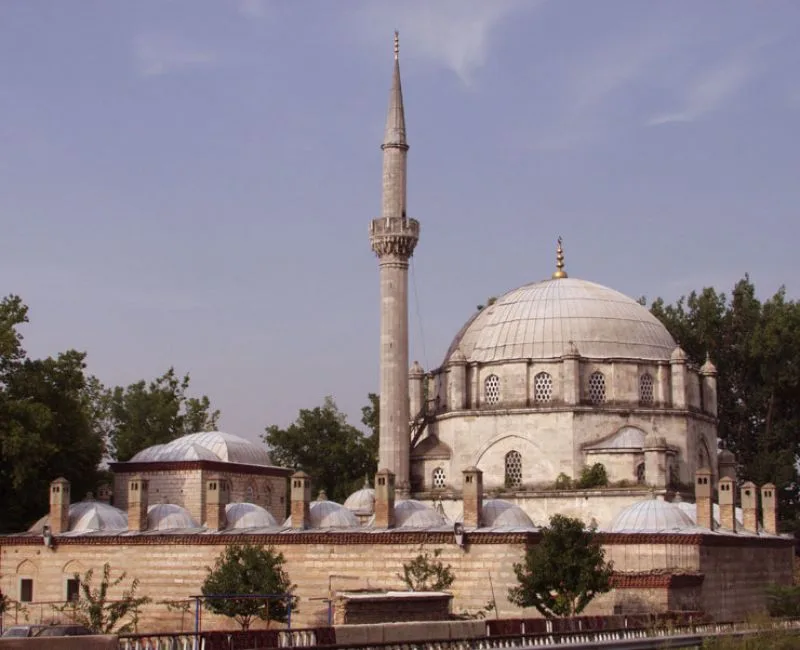
The name of the mosque comes from the shape of its dome and derives from the Turkish word “tombul”, which means “fat”, “puffed up”, “spherical”.
The mosque was built in 1740-1744. It is a fine example of the oriental style with Baroque elements. The mosque consists of a prayer hall, a courtyard and an annexe that housed a Muslim school — a medrese. The library was there too, holding exceptionally valuable editions. The height of the main building is 25 metres, the height of the minaret is 40 metres. Inside, the prayer hall is painted with floral ornaments and geometric patterns.
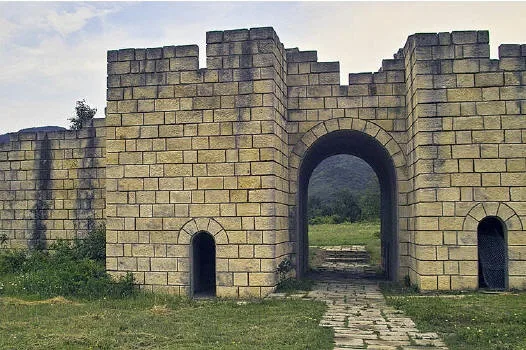
Interestingly, the construction of the mosque made use of columns from the palace in Pliska that belonged to Bulgaria’s earliest rulers. Scholars suggest that the palace complex of the first Bulgarian capital was well preserved until the 18th century, and that this monument was destroyed only during the building of the mosque.
Visiting
The majestic Tombul Mosque is still in use today. And it can be visited on a tour. Admission costs 4 leva for adults and 2 leva for students. Photography is allowed for 2 leva, and filming costs twice as much. A talk in Bulgarian costs 6 leva.
The mosque is open to visitors daily from 8 in the morning until six in the evening. There are souvenir kiosks on the grounds where you can buy information brochures in various languages, including Russian.
Its status as a working mosque imposes certain restrictions on visitors. In particular, you will need to take off your shoes at the entrance, and women should choose covering clothing and cover their heads.
Did not find the answer here? Write to us — we will look at your case and tell you what comes next.
Mon–Fri 9:00–17:30 (EET)
Ask a question Useful information
NSI, the National Revenue Agency (NAP) and the Registry Agency are introducing the "Single Entry Point" information system From 1 January 2027, a new procedure…
 Useful information
New amendments to the Law on Foreigners (ZChRB) could change the rules on employment of foreigners and on keeping residence status in Bulgaria.
 Useful information
The subject of obtaining an EU Blue Card (Синя карта на ЕС) in Bulgaria remains one of the most discussed topics among foreign highly qualified specialists and employers.
This article describes the general procedure. Your situation almost always has specifics — tell us about it and we will point out the shortest route.
Book a consultation