Issuing invoices during the transition to the euro
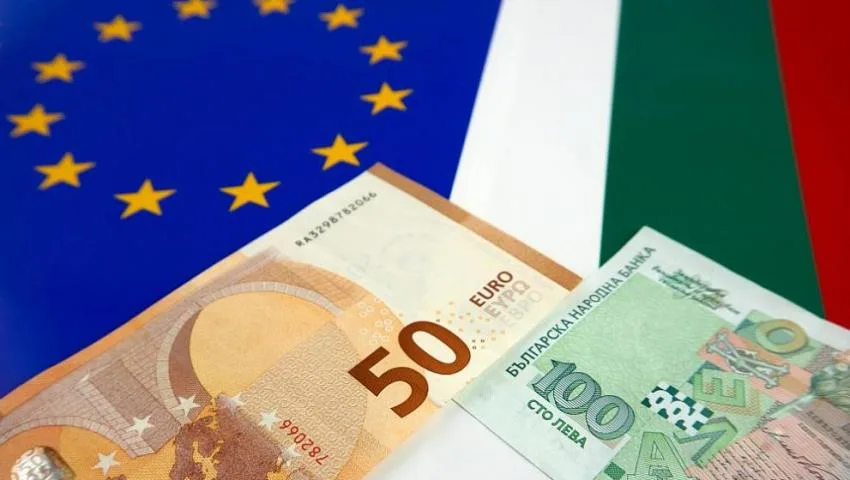
On 8 July the question of Bulgaria joining the eurozone from 01.01.2026 was decided in the affirmative, and the country began preparing for the transition to the new currency.
3 min read
While for ordinary Bulgarians and foreigners in Bulgaria this means little more than minor inconvenience when shopping, those who run a business in Bulgaria have considerably more questions. In this article we address one of them – the issuing of invoices in light of the introduction of the euro.
Do prices have to be shown in two currencies on invoices?
From 8 August all prices in Bulgaria must be shown in two currencies. Does this apply to invoices? The answer is categorical: no. Under Art. 15, para. 3, item 5 of the Law on the Introduction of the Euro (ЗВЕРБ), invoices, as well as credit and debit notes, state only one currency. This exception is due to the technical difficulties and the risk of errors when two currencies are stated on invoices. For an invoice to be valid from a legal point of view, it must be in one currency – until the end of 2025 this is the lev, and from 1 January 2026 the euro.
Dual display of prices was introduced in Bulgaria to protect individuals, so that they can get used to the new prices and are able to compare them with the old ones. Invoices, on the other hand, are documents for professionals, who can handle the calculations without such prompts.
Can prices be shown in two currencies on an invoice?
There is no obligation to state prices on an invoice in both levs and euros, but neither is there a ban on dual display of prices. Some companies offering software for accountants provide the option of using two currencies. Is it advisable to use this option? We recommend avoiding it for several reasons:
Risk of payment errors. The client may not work out which of the two stated amounts they have to pay. This can lead to incorrect bank transfers and late receipt of payments.
Problems with rounding and totalling. If an invoice has many line items, a discrepancy will almost certainly arise between the lev values on the individual lines and the total in levs obtained by converting from euros. Such discrepancies may give rise to mistrust and doubts about the correctness of the document.
Increased risk of accounting errors. The more figures there are, the greater the risk of technical errors when drawing up invoices
Slower processing of primary documentation. Drawing up invoices will take more time because of the need to check that the conversion is correct.
In our view, not stating dual prices on invoices before the transition to the euro will save the accountant time and make their work more efficient. For this reason we consider voluntary dual display of prices to be bad practice that complicates the work of accountants.
The staff of Bulgarian Expert strive to make their clients’ work as efficient as possible. To guarantee maximum clarity of financial documents and good speed and efficiency of work, we recommend not using dual display of prices on invoices and using only the lev in calculations until 31.12.2025, and only the euro from 01.01.2026.